
Stative verbs require new ingredients to be added to our grammar potions.
Stative verbs, also called state verbs, describe a state of being, condition, or a situation rather than an action.
Simple Present: Timeless Use
Stative verbs are often used in the simple present to express:
- states or conditions → you do not know when the state ends
- habitual actions
- truths or facts
Important Note
Many stative verbs can also have a dynamic meaning, so be careful.
- I think you are right. (stative → opinion)
- I am thinking about the problem. (dynamic → action)
The aspect of the tense changes, which allows the stative verb “think” to function as a dynamic verb.
Common Categories of Stative Verbs
1. Cognition / emotion
- know
- believe
- love
- hate
2. Obligation / necessity / desire / attitude
- need
- want
- prefer
3. Ownership / possession
- have
- own
- belong
4. Measurement
Some verbs can be stative depending on meaning, but many are dynamic.
- weigh
- measure
5. Linking verb
Also called copular verbs, these verbs connect the subject to a complement by expressing a condition, appearance, or sense perception.
- be
- seem
- appear
- feel
The “Highly Irregular” Verbs
The verbs to have, to be, and to do are highly irregular.
They do not follow standard simple present tense spelling rules.
Meaning Overview
- To have → show ownership or possession
- To be → links the subject to a complement, such as predicate adjective, predicate noun, or adverbial complement
- To do → means to perform or complete an action or task. The direct object is what the subject acts on or completes.
Subject-Verb Agreement in Simple Present
| To be | To have | To do | ||
| Singular | 1st person | am | have | do |
| 2nd person | are | have | do | |
| 3rd person | is | has | does | |
| Plural | 1st person | are | have | do |
| 2nd person | are | have | do | |
| 3rd person | are | have | do | |
Subject Complements
Subject complements, also known as subjective complements, describe or rename the subject and follow linking verbs.
They include:
1. Predicate Adjectives
Describe a physical or opinion-based characteristic of the subject
- I am pretty.
2. Predicate Nominatives
Also called predicate nouns, these rename, identify, or classify the subject by restating what the subject is.
- Mark is a doctor.
Expanded View of Direct Objects
1. A direct object receives the action of the verb.
- She kicks the dog.
2. A direct object may be derived from the action or result from the action.
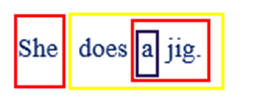
- She does a jig.
- She dug a hole.
3. The action results in receiving or possessing a direct object.
- I have a boat.
4. A direct object may follow certain stative verbs that express preference, emotion, or mental activity.
This applies with verbs such as enjoy, love, hate, like, need, prefer, understand, and remember.
- I enjoy jogging.
Adverbial Complement
Some adverbial complements tell you where the subject is from or at. Adverbs and adverbial prepositional phrases often function as complements to the linking verb to be.
Educational Resources Observation
Grammar terms can sometimes be confusing because different resources:
- use slightly different definitions
- simplify concepts too much
- or do not fully explain how terms function
Oversimplified definitions can create more confusion than detailed explanations.
Understanding “Object” and “Complement”
- The term object is often used as an umbrella term for:
- direct object
- indirect object
- object of the preposition
- The term complement is broader and includes:
- subject complements
- objects
- and other required elements of a verb
If you are unsure, labeling something as a complement is a safe and accurate choice.
Even linguists refine definitions by observing patterns in language over time.
Boxing in Phrases
Words of Wisdom
“A wise soul gives credit to the person who guides them.”