
Welcome, enchanting potion brewers of language! Today, we delve into the cauldron to unravel the mysteries of demonstrative pronouns and noun adjuncts. Just as a potion requires precise ingredients to reveal its magical properties, understanding these elements will enhance your linguistic spells, allowing you to convey time, space, and purpose with clarity and precision
Demonstrative Pronouns
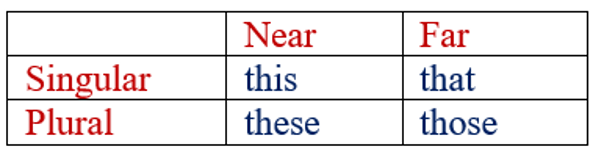
Demonstrative pronouns are pronouns used to replace noun phrases by identifying location—in terms of space, time, or emotional distance—and number. They may also point directly to something present in the speaking situation.
Demonstrative pronouns can refer to concrete nouns, such as things you can see or touch, or abstract nouns, such as feelings, ideas, actions, or situations.
Characteristics
Demonstrative pronouns communicate three main kinds of information:
- Proximity: whether the referent is near or far in space, time, or emotional distance
- Number: whether the referent is singular or plural
- Abstract or Concrete: whether the referent is concrete or abstract
Sentence Positions
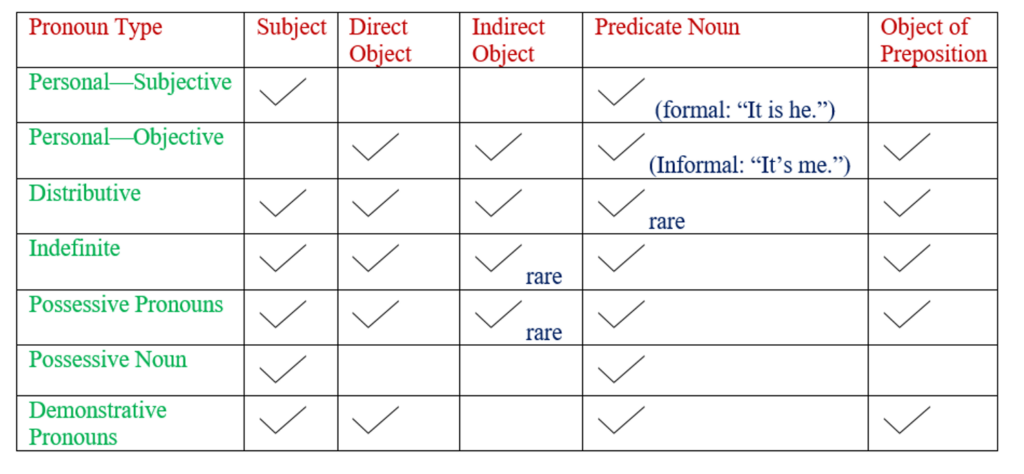
Demonstrative pronouns can serve in several grammatical roles including subject, direct object, predicate nominative, and object of the preposition.
- Subject: This is delicious.
- Direct Object: I want that.
- Predicate Nominative: My favorite is this.
- Object of the Preposition: We talked about those.
Reference to People and Abstract Ideas
Demonstrative pronouns can refer to people, objects, events, situations, or abstract ideas. They also point in different directions within a conversation or text. This gives us another useful way to classify them.
1. A deictic pronoun points outward to something in the real-world situation. The referent is not identified by the surrounding text; instead, the listener relies on context.
Deictic Demonstrative Pronoun Examples:
- This is Mike.
- Put those on the table.
In these examples, the speaker is likely pointing to a person or object in the shared physical setting.
2. An anaphoric pronoun points backward to something already mentioned.
Anaphoric Demonstrative Pronoun Example:
- Mia helped her neighbor carry groceries. That was a kind gesture.
Here, “that” refers back to Mia helping her neighbor.
3. A cataphoric pronoun points forward to a referent that appears later in the text.
Cataphoric Demonstrative Pronoun Example:
- This is true. The bowl is broken.
In these example, this prepares the reader for information that follows. The first sentence sets up the forward-pointing demonstrative; the second delivers the referent. This is called discourse cataphora.
If you struggle with these terms, consider three ways the demonstrative pronoun’s referent appears: shortly revealed, mentioned earlier, or something in the real-world context.
In other words, a demonstrative pronoun is like a tiny magical pointer: sometimes it points ahead, sometimes behind, and sometimes straight across the room at a suspiciously bubbling cauldron.
Advanced Concept
Remember that nouns can have many classifications. Guess what? Pronouns can have more than one classification.
First, let’s list all the pronouns we have talked about: personal pronouns in the subjective case, personal pronouns in the objective case, distributive pronouns, indefinite pronouns, demonstrative pronouns, possessive nouns (genitive nouns used pronominally) and cardinal numbers used pronominally.
Factory Metaphor
First Factory: Syntactic Functions
Not all pronouns can function in every role, and no pronoun can function as a noun adjunct.
Second Factory: Referential, Exophoric, and Non-referential
The magic of this factory: you’re classifying the job the word is doing in context, not the word itself. The same word—it, this, she—can earn a different stamp depending on what it points to. This factory has two belts: referential and non-referential (points to nothing).
Belt One: Referential
1. Anaphoric pronouns stand in for a noun already been given.
- The referent points backward to the noun it replaced.
- Ante– = before → antecedent (anaphora)
- Example: Maria jumped over the log. She ran up the hill.
- Demonstrative Example: That was a kind gesture.
2. Cataphoric pronouns point forward to a noun phrase, clause, event, or idea that is identified later in the sentence or passage. If in the following sentence it is called discourse cataphora.
- The pronoun comes first.
- The pronoun points to the noun.
- Post– = after → later referent (cataphora)
Note: Some sources call this later expression a “postcedent”, but “referent” is the more useful general term.
3. Deictic is when no text identifies the referent—you rely on the situation.

Note: Even college-level grammar books often use “antecedent” as a general term for the noun that a pronoun replaces. Use “referent” as the umbrella term.
Belt two: Non-referential
- Dummy Pronouns “It, There”
- Points nowhere—fills the slot.
- Example: It is raining.
Lesson 83 is where we will learn about dummy pronouns.
Noun Adjuncts
A noun adjunct is a noun or gerund that modifies another noun by explaining the type, purpose, or association. Noun adjuncts always appear right before a noun they modify.
In Lesson 10’s adjective order, noun adjuncts typically relate to purpose, helping to define or specify the noun.
Evolution to Compounded Forms
Linguists observe that noun adjuncts can transition from open compounds to hyphenated and eventually closed compounds as usage becomes more common.
- Open Compound: ice box
- Hyphenated Compound: ice-box
- Closed Compound: icebox
Note: Many compounds follow this path—even “today” was once written “to day,” then “to-day.”
Noun Adjuncts Function to Show:
1. Type or Category
- Example: The round coffee table is placed in the living room.
- Explanation: “Coffee” specifies the type of table.
2. Purpose or Function
- Example: The phone number is on the wall.
- Explanation: “Phone” indicates the function of the number.
3. Association or Ownership (for whom or what)
- Example: The garden tools make my job easier.
- Example: The school project is due Monday.
- Explanation: “Garden” and “school” show association with tools and project, respectively.
Examples: car keys, computer screen, computer science, food market, book club, book cover, school project, school bus, coffee table, coffee shop, office chair, fire alarm, phone number, garden tools, garden, kitchen table…
Multiple noun adjuncts can be used together in a phrase:
Example: Coffee shop tables provide comfort.
Structure of Complex Noun Phrases
This is one possibility of a noun phrase:
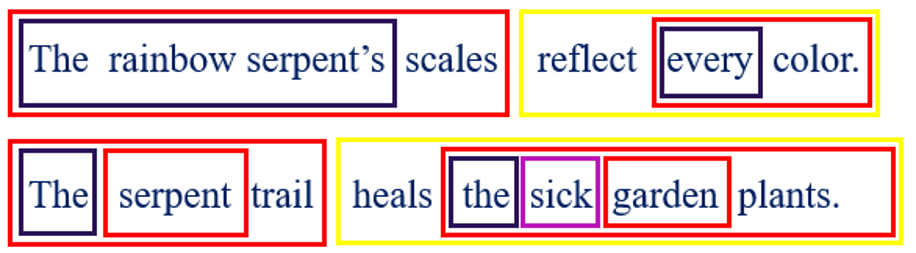
Noun Phrase → determiner phrase + adjective phrase + participle + noun adjunct + noun + adjectival prepositional phrase
Be ready to handle complex noun phrases by recognizing that adjectives of purpose may be noun adjuncts. This understanding helps correctly placing adjectival participles.
Note: Consult your adjective order chart and note “noun adjunct” alongside adjectives of purpose for clarity.
Possessive Nouns
A possessive noun is a noun in the genitive (possessive) case. Even when a noun is functioning as a possessive, it can still take a noun adjunct in front of it. A group genitive is when a noun adjunct and possessive noun create a structure together.
- Example: City park’s opening hours are 7:00 a.m.
Expanding the Noun’s Role
Traditionally, students learn that nouns serve the following functions:
1. Subject
2. Direct Object
3. Indirect Object
4. Predicate Noun
5. Object of the Preposition
Now, add a sixth:
6. Noun Adjunct: a noun used to modify another noun (acts like an adjective but remains a noun in form and function)
Boxing in Phrases
Words of Wisdom
“Believe what your enemy is telling you, prepare for their intended outcome.”